
Editorial Team
CarOrigins · Published June 2026
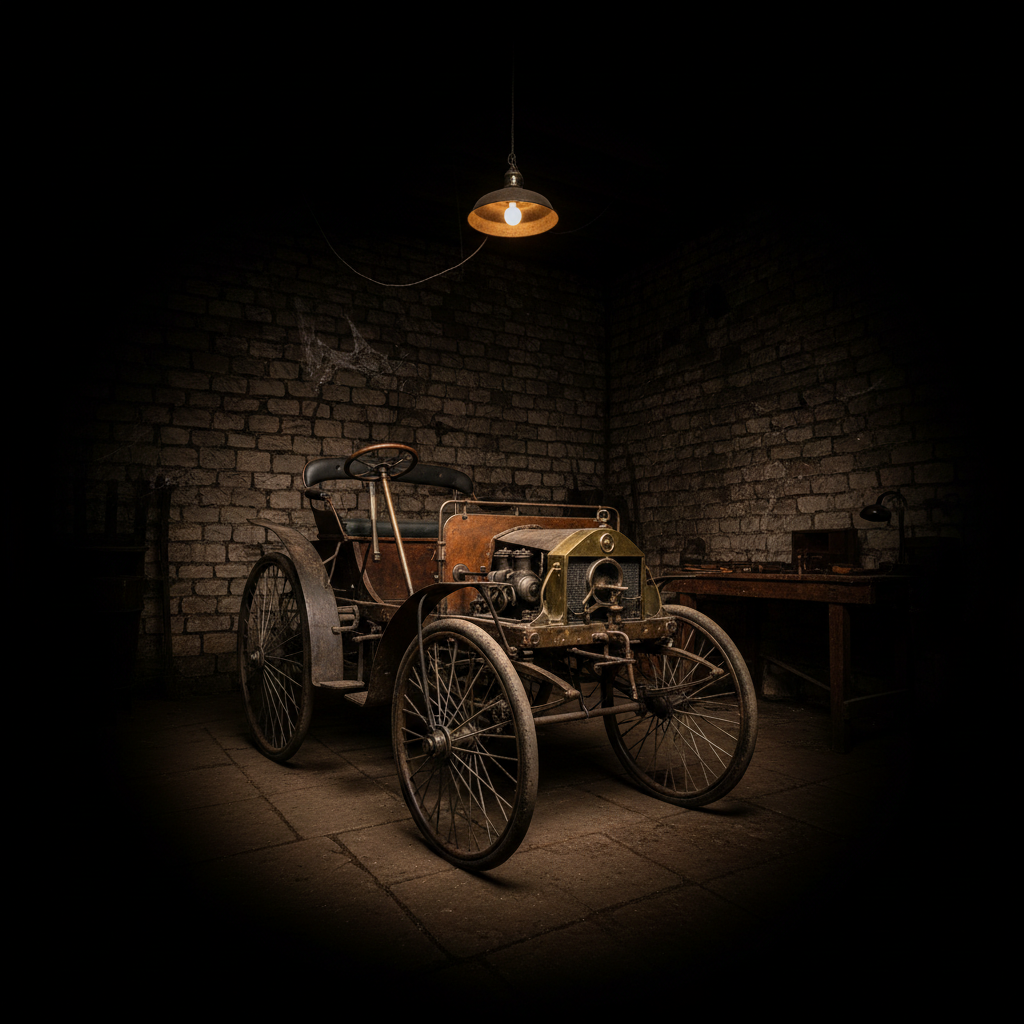
On a cold evening in 1885, in a workshop behind his home in Mannheim, Germany, Karl Friedrich Benz completed the vehicle that would change everything. He called it the Patent-Motorwagen — Patent Motor Car. It had three wheels, a single-cylinder four-stroke engine, and could reach a terrifying top speed of 16 kilometers per hour.
The world wasn't ready. Horses were still king. Steam engines powered factories. The very idea that a man could build a self-propelled carriage — one that didn't need an animal to pull it — was seen by most as a curiosity at best, a dangerous folly at worst.
"The love of inventing never left me, even for a moment."
— Karl Benz, 1925
A Man Ahead of His Time
Benz had been obsessed with the idea of a self-propelled vehicle since the 1870s. He founded his first company — Benz & Cie — in 1883, ostensibly to manufacture industrial gas engines. But his real goal was always the motorcar. He worked in secret, afraid that his business partners would think him mad.
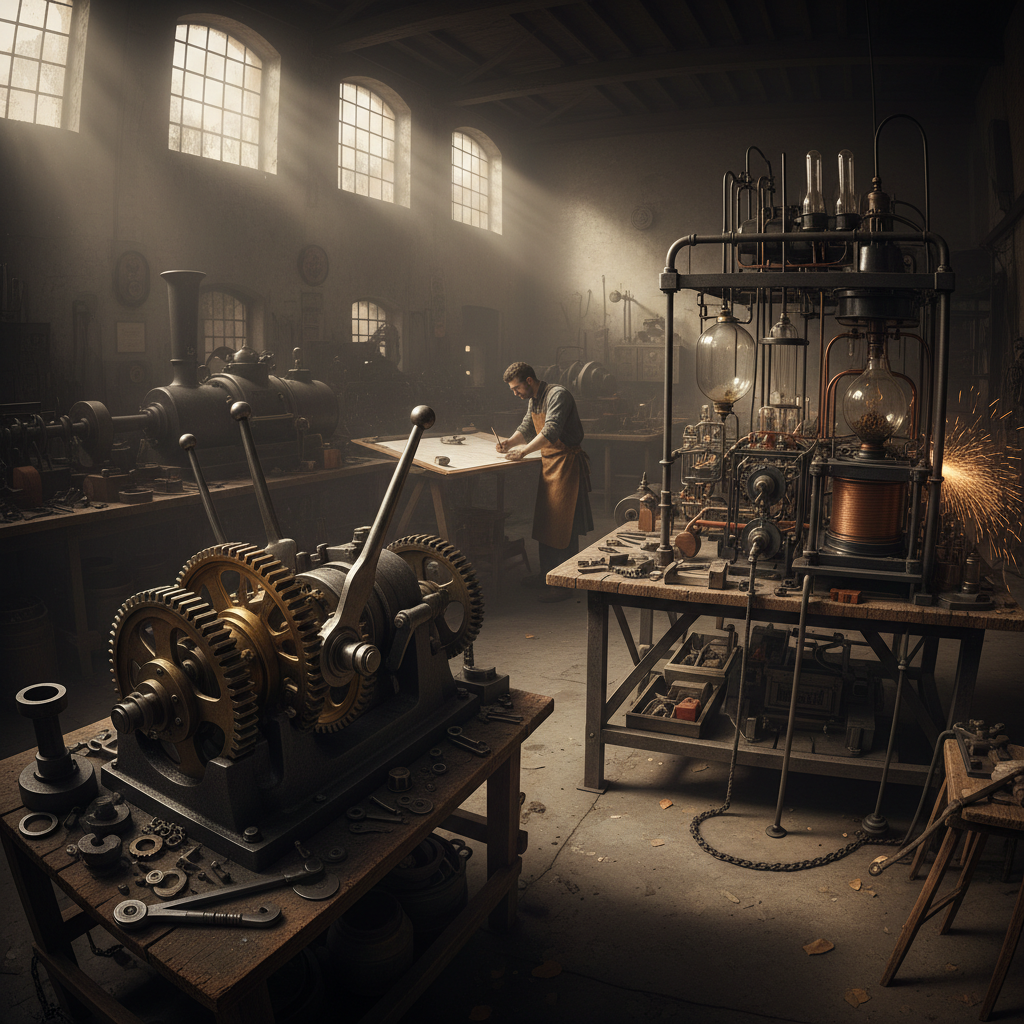
An early single-cylinder four-stroke engine, similar to Benz's 1885 design.
The Patent That Changed History
On January 29, 1886, Benz filed patent number 37435 with the Imperial Patent Office in Berlin. It is now recognized as the birth certificate of the automobile. The document described a "vehicle with gas engine operation" — a machine that would, within two decades, begin to transform every road, every city, and every economy on Earth.
But the patent alone wasn't enough to convince the public. The Motorwagen sat largely unnoticed in trade exhibitions. Newspapers wrote about it with mild curiosity. It took a brave woman — Karl's wife, Bertha Benz — to prove that the automobile was more than a workshop experiment.
Bertha Takes the Wheel
In August 1888, without telling Karl, Bertha loaded their two teenage sons into the Patent-Motorwagen and drove 66 miles from Mannheim to Pforzheim — to visit her mother. It was the world's first long-distance automobile journey. She stopped at pharmacies along the way to buy ligroin fuel, unclogged a blocked fuel line with her hairpin, and used her garter to insulate a wire. She returned home three days later, having proved to the world — and to Karl — that the automobile worked.
1885
Patent Filed
16 km/h
Top Speed
66 mi
Bertha's Journey
Karl Benz lived to see his invention transform the world. He died in 1929, just as the automobile industry was producing millions of cars per year. The company he founded merged with Daimler-Motoren-Gesellschaft in 1926 to form Mercedes-Benz — a name that endures to this day as a symbol of automotive excellence.